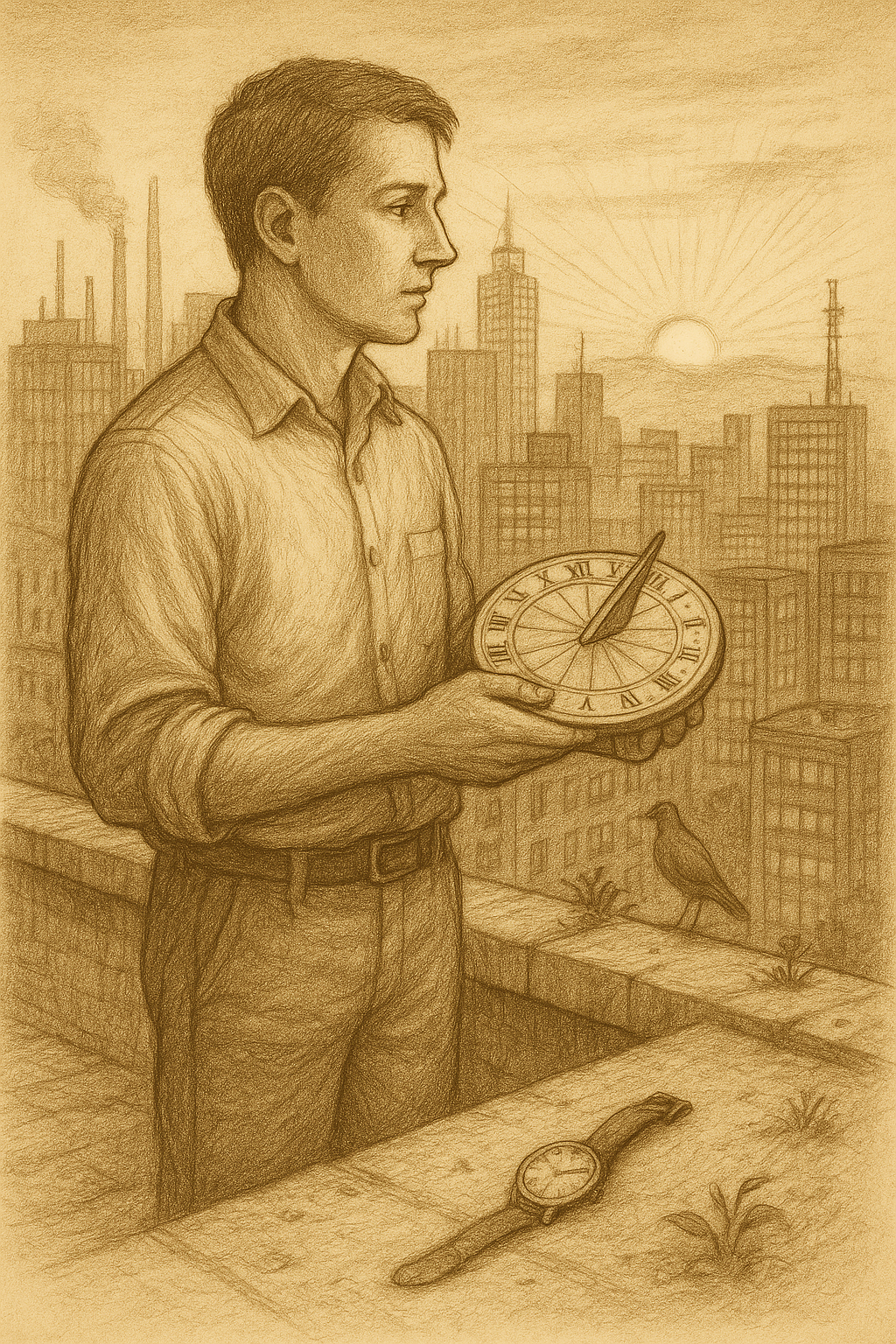
Living by the Sun in a Digital Age
In an age where digital clocks and artificial lighting define our waking and sleeping hours, the idea of returning to a natural, solar-based rhythm might seem quaint or even impossible. Yet, in the quiet moments of early morning or the golden hush of evening, many still sense a longing for something more rooted, more human. This is the promise of solar time—not as a rejection of technology or modern life, but as a gentle reorientation, a way of syncing life’s tempo with the great cosmic order that governs the rising and setting of the sun.
Solar time divides the day not into static 60-minute hours, but into twelve equal parts from sunrise to sunset—horae—and four watches through the night—vigilae. These divisions shift naturally with the seasons: longer in summer, shorter in winter, always tethered to the sun’s journey across the sky. For millennia, this was the only time people knew. And for many, it brought a deeper awareness of the day’s flow, and a closer connection to nature’s rhythms. Could it still have a place in modern life?
Solar Time for the Individual
For someone living in a contemporary urban or suburban setting, adapting to solar time does not mean abandoning civil time, but layering meaning upon it. One might begin by observing the twelve solar horae through a visual aid—perhaps a watch face or app that maps the changing length of each hour throughout the day. Over time, one begins to notice how mornings unfold differently in winter than in summer, and how the sixth hour (solar noon) doesn’t always match 12:00 PM on the clock. These small observations reawaken sensitivity to the light itself.
A person might gradually shape their schedule around these solar cues. Morning prayer could be aligned with Tertia (around mid-morning), lunch taken at Sext (near true midday), and a moment of quiet at Vespers (approaching sunset). Rather than rigid obligations, these become rituals—gentle nudges to stop, to observe, to sanctify time. And, as a small but satisfying bonus, such a life never requires adjusting to daylight savings time. The sun never changes its habits; it is civil time that scrambles our internal clocks twice a year.
Solar Time in the Parish
Now imagine an urban parish choosing to adopt solar time not for scheduling office hours, but for framing its spiritual life. The Liturgy of the Hours—Morning Prayer, Midday Prayer, Evening Prayer, Compline—could be announced or prayed according to the shifting solar clock. A bell tower might sound at canonical moments not rigidly fixed, but responsive to the day's light.
Liturgies could take on a renewed texture. A sunrise Mass truly feels like Prima, the first light. Evening devotions during Vespers remind the faithful of the sun’s descent and life’s eventual rest. Parish bulletins might include a small table of local horae for the week. Such a parish would become an anchor of natural rhythm in the heart of the city—a quiet protest against the unrelenting sameness of 24-hour time.
Moreover, such a community could become a haven for those burned out by the pace of modern life. Solar time gently reminds us that every day is different. Each sunrise brings a different length of light; no day repeats exactly. In that uniqueness, one begins to rediscover the gift of time.
A Society Transformed
It might seem far-fetched to imagine society at large living by the sun once again. But consider this: modern life is already beginning to feel the strain of disconnection from natural time. Blue light disrupts sleep. Workdays ignore seasonal changes in daylight. The artificial rhythms of shift work and global scheduling contribute to rising anxiety and burnout. In this context, solar time isn’t regressive—it is prophetic.
What if schools opened closer to local sunrise, and closed before sunset in winter? What if cities lit up not on timers, but when the fourth watch of the night began? What if digital calendars offered an optional solar overlay, helping people plan days in line with real light and dark? These shifts need not happen all at once. But gradually, as people rediscover the wisdom in solar rhythm, it could inspire a subtle but profound renewal in how we structure work, rest, worship, and community.
The Light Ahead
Adopting solar time doesn’t require utopian ambition or radical change. It begins with attention—watching the sun, listening to bells, pausing in prayer. For some, it may remain a quiet interior practice. For others, it may blossom into shared observance. And for society, it may serve as a gentle invitation to rediscover the order that nature has always offered freely.
In a world often governed by speed, efficiency, and artificial rhythm, solar time offers not control but harmony. It asks not that we master the hours, but that we let them sanctify us. And in that sanctification, we may yet find rest, renewal, and a time made full.
Renovatio ex Traditione. Let us reclaim the day.