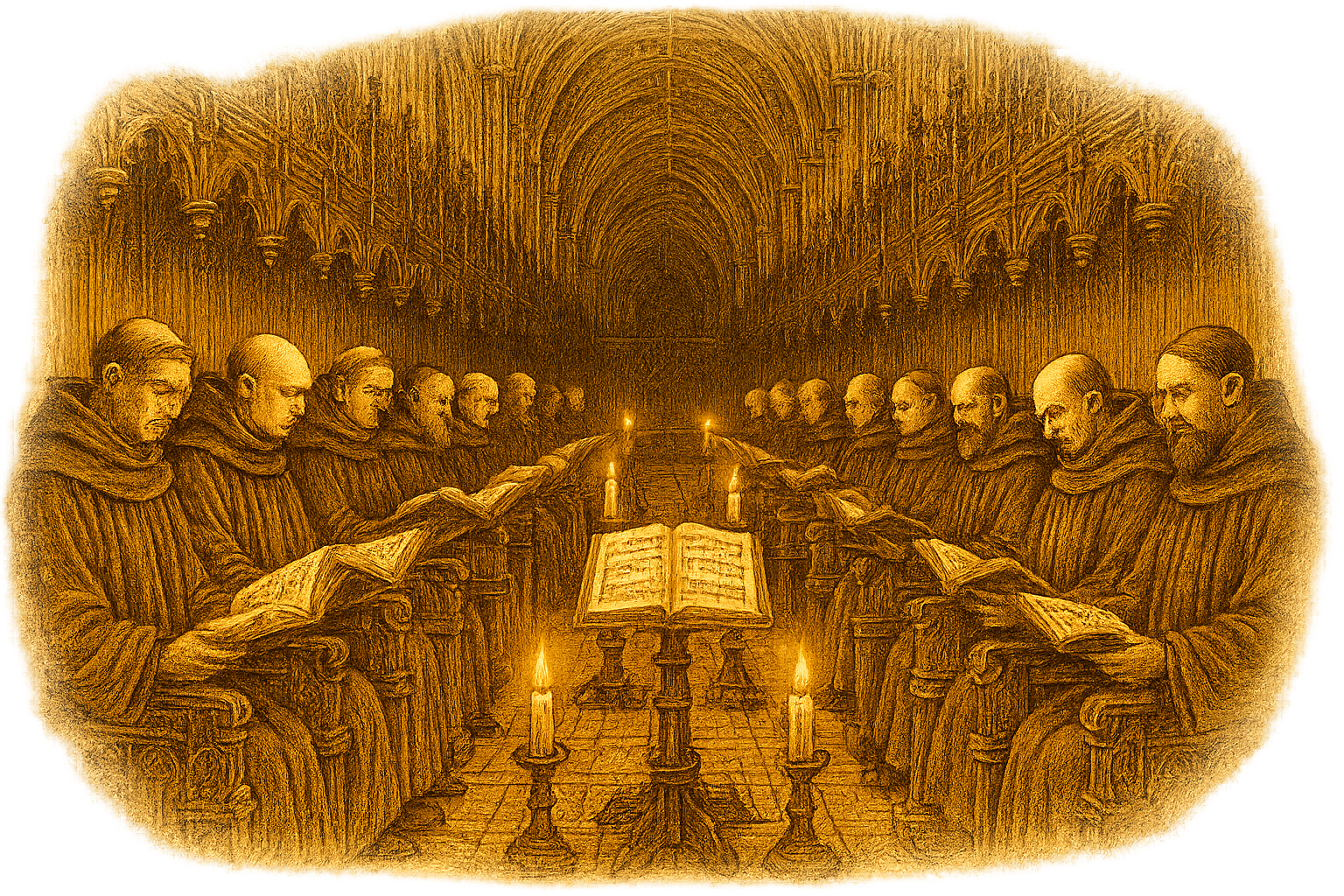
The Breviary and the Broken Clock
Once, the rhythm of Christian prayer followed the rhythm of the sun. The Church’s liturgical hours— Prima, Tertia, Sexta, Nona, and the night vigils—did not tick by the hands of a mechanical clock but flowed with the arc of the sun across the sky. Noon was not 12:00pm by decree, but the moment when the sun stood highest. The canonical hours rose and fell with the seasons, stretching and contracting like breath. Monks prayed when the cock crowed, when the shadows shortened, when dusk fell—not by appointment, but by awareness.
This intimate bond between the breviary and the solar cycle was not merely poetic—it was formative. The day’s prayers were tied to light and dark, to work and rest, to toil and thanksgiving. Nature herself became a catechist, a silent yet eloquent instructor in the habits of sanctity.
Today, that connection is severed.
Modern schedules mark Lauds at 6:00am sharp, regardless of whether dawn has broken. Vespers is sung by electric light. The clock—once a tool of the monastery—has become its master. The Divine Office, once alive with the seasons, has been reduced to a sterile regimen of digital reminders. The ancient harmony between prayer and creation has been flattened into mechanical uniformity.
This is not merely a liturgical loss, but a civilisational one. We have replaced the living day with a standardised fiction. And in doing so, we have lost not only our sense of time, but our place within it.
The Roman Solar Time project is a small effort to restore this memory—to recalibrate our sense of sacred time with the sun, the seasons, and the order that once governed both monastery and market alike. It is a protest, not against technology, but against its misuse: against a world that has forgotten the dawn.
Renovatio ex Traditione. Let the sun once again teach us how to pray.
| Modern Misconception | Traditional Understanding |
|---|---|
| Matins: A midnight office, rarely recited outside monasteries. | Matins: Often recited during the First Watch of the night, usually soon after sunset by conventual monasteries. Many observant houses would pray it during the Second or even the Third Watch. Sometimes anticipated in the mid-afternoon by less observant communities. Structured in three nocturns, each aligned to one of the first three watches. Devotionally, it marks Christ’s agony in the garden and arrest. |
| Lauds: Prayed at sunrise or upon rising, sometimes delayed until later in the morning. | Lauds: Associated with cockcrow, the entry into the Fourth Watch. It was most often paired with Matins (and thus anticipated), largely because rising for the Fourth Watch was deemed excessively onerous by many. Devotionally, recalls Christ before the Sanhedrin and Peter’s denial. |
| Prime: A 6:00 AM office, seen as redundant and suppressed in the 20th century. | Prime: The first hour after sunrise, beginning the monastic workday. Devotionally, Christ judged by Pilate. |
| Terce: A mid-morning prayer at 9:00 AM. | Terce: The third solar hour after sunrise, ending mid-morning. Devotionally, Christ sentenced and beginning His journey to Calvary. Associated with the hour markets would open. |
| Sext: A noon or 12:00 PM office. | Sext: The sixth and final ante meridiem hora, concluding shortly before true midday. Devotionally, marks the Crucifixion. |
| None: The “Hour of Mercy” at 3:00 PM. | None: The third post meridiem hora, occurring soon after noon. Devotionally, recalls the death of Christ. The 3 PM observance emerged later; ancient practice, drawing from Scripture, placed it slightly earlier. |
| Vespers: A nightfall prayer, frequently recited after dark. | Vespers: Offered in the late afternoon some time before sunset, anticipating rest and transition. Separated from Compline by a light meal. Devotionally, evokes the removal of Christ’s body from the Cross. |
| Compline: Final prayer before bed. | Compline: A pre-sunset “stocktake”, concluding the day’s labours before the evening meal and retirement. Devotionally, reflects Christ’s burial and the sealing of the tomb. |
These ancient hours were not defined by mechanical clocks but by the heavens themselves. The Roman Solar Time app offers a renewed opportunity to align life, work, and prayer to the natural rhythms once honoured by saints and monks alike.